
Should You Replace Your Roof Before Installing Solar Panels? A Washington Homeowner’s Guide
Installing solar panels can be a long term investment in your home, but there’s another major system sitting directly underneath them that shouldn’t be overlooked: your roof.
If the roof is relatively new, properly installed, and in good condition, there may be no reason to replace it before going solar.
If it’s already aging, leaking, showing widespread deterioration, or approaching the point where replacement is likely, installing solar first can make future roofing work more complicated.
That’s because roof replacement on a home with an existing rooftop solar system generally requires the panels and mounting equipment to be removed so roofers can access the roofing materials underneath. The U.S. Department of Energy specifically notes that solar panels and mounting systems need to be removed during a roof replacement.
So the question isn’t:
“Do solar panels mean I need a new roof?”
Usually, they don’t.
The better question is:
“Does my existing roof have enough useful life and structural condition to make installing a long lived solar system over it a sensible decision?”
The Department of Energy recommends considering your roof’s age and condition before installing solar and notes that coordinating solar with an already needed roof replacement can save homeowners from having to deal with the two projects separately.
Here are seven things we’d want homeowners to think about before panels go on the roof.
1. How Old Is the Roof?
Roof age isn’t enough by itself to determine whether replacement is necessary, but it’s one of the first pieces of information worth establishing.
Solar panels can remain productive for decades. The Department of Energy reports that most residential solar systems maintain at least 80% of their original power output for at least 25 years.
That creates an obvious planning question.
If you’re installing a system intended to remain on the roof for decades, but the roofing underneath it may need replacement relatively soon, should you address the roof first?
Possibly.
An older roof doesn’t automatically need replacement
A roof shouldn’t be replaced just because it reaches a particular birthday.
Actual condition matters.
Depending on the roofing material and system, we’d also consider:
- previous repairs;
- active or recurring leaks;
- missing or damaged roofing materials;
- granule loss;
- flashing condition;
- decking condition;
- ventilation;
- installation quality;
- storm damage; and
- signs of moisture intrusion.
GAF similarly identifies roof age, extent of damage, repair history, and overall condition as important considerations when deciding between roof repair and replacement.
A 15 year old roof in excellent condition may be a very different situation from a 15 year old roof that’s already leaking in several locations.
That’s why an inspection is more useful than relying on age alone.
2. Does the Roof Already Have Leaks or Water Intrusion?
If you already know the roof leaks, we’d strongly recommend understanding the source before covering portions of the roofing system with solar panels.
A leak doesn’t always mean you need a full roof replacement.
It could involve:
- damaged shingles;
- roof flashing;
- a plumbing vent;
- skylight flashing;
- a chimney;
- roof to wall flashing;
- a valley;
- exposed or misplaced fasteners; or
- another localized condition.
But you don’t want to knowingly install a new solar system over a roof problem and assume it’ll somehow become easier to address later.
Repair first or replace first?
That depends on the scope.
A relatively new roof with one isolated and repairable defect may only need a targeted repair before solar installation.
A roof with widespread deterioration, recurring leaks, multiple prior repairs, or damaged decking may call for a broader conversation.
The important step is finding out why the roof is leaking before the solar installation begins.
3. What’s the Condition of the Roof Decking?
The shingles or metal panels you see from outside aren’t the entire roof.
Underneath the roofing material is the roof deck, typically constructed from plywood, OSB, or another approved sheathing material depending on the building.
That deck helps support both the roofing system and loads transferred through the roof structure.
Solar mounting systems also need to be attached and supported appropriately.
Washington’s residential solar provisions address structural loading for rooftop photovoltaic systems and set conditions under which a roof structure can be considered adequate for specified system loads.
The solar installer, engineer, or other qualified professional is responsible for determining the solar system’s structural requirements.
From the roofing side, though, it’s worth identifying visible signs that the roof itself may already have problems.
Conditions that deserve attention can include:
- sagging;
- soft or deteriorated areas;
- previous water damage;
- delaminated or damaged sheathing;
- long term leaks;
- visible deterioration from accessible attic areas; or
- other structural irregularities.
If deteriorated decking needs to be replaced, it’s generally much easier to address before solar equipment covers the roofing system.
4. Are the Shingles or Roofing Materials in Good Condition?
Solar panels don’t replace the roof beneath them.
The roofing system still needs to do its job.
On an asphalt shingle roof, that means evaluating conditions such as:
- cracking;
- curling;
- missing shingles;
- displaced shingles;
- excessive wear;
- exposed fasteners;
- widespread granule loss;
- previous patches; and
- deterioration around penetrations and flashing.
GAF lists missing, cracking, buckling, curling, sagging, recurring leaks, and other widespread damage among the signs homeowners should evaluate when considering whether an older roof may need replacement.
What if the roof only needs minor repairs?
Then replacement may not make sense.
The goal shouldn’t be to sell homeowners a roof simply because they’re installing solar.
A roof that’s structurally sound, performing properly, and expected to remain serviceable may only require limited maintenance or no roofing work at all.
That’s why we’d rather have the condition evaluated than assume every solar project should include a new roof.
5. What Condition Are the Flashing and Roof Penetrations In?
Solar mounting introduces its own installation details, but we’d also want to understand the condition of existing roof penetrations and flashing before additional equipment is installed.
Areas worth evaluating include:
- plumbing vents;
- chimneys;
- skylights;
- roof to wall intersections;
- valleys;
- existing flashing;
- vents; and
- previous roof penetrations.
Flashing is one of the roofing system’s primary defenses around transitions and penetrations where water can’t simply flow down an uninterrupted roof surface.
If an existing skylight, chimney, vent, or roof to wall transition already has questionable flashing or signs of leakage, solar installation doesn’t make that existing problem disappear.
Addressing known water management problems first can help avoid having to coordinate roofing repairs around newly installed panels.
6. Will the Roof Need Replacement Before the Solar System Does?
This is really the heart of the decision.
The Department of Energy says most solar panels can remain productive for 25 years or longer and specifically advises homeowners to consider the relationship between the age of the solar system and the age of the roof beneath it.
Consider two hypothetical homes.
Home A
- Roof replaced 3 years ago
- No known leaks
- Roofing materials in good condition
- Flashing appears serviceable
- No known decking problems
There’s no obvious reason from the roofing side to replace a nearly new, healthy roof solely because solar panels are being added.
Home B
- Roof approximately 20 years old
- Several prior repairs
- Shingles showing widespread wear
- History of leakage
- Solar installation planned for the next few months
That homeowner has a much more important planning decision.
They could install solar first and potentially face panel removal and reinstallation when the roof needs replacement.
Or they could determine whether replacing the roof first makes more sense.
The Department of Energy specifically notes that installing solar at the same time as an already needed roof replacement can sometimes save money and avoid future panel removal and reinstallation.
7. Have the Roofer and Solar Installer Evaluated Their Separate Responsibilities?
Roofers and solar contractors work on the same physical structure, but they have different responsibilities.
Your roofing contractor should evaluate things such as:
- roofing material condition;
- leaks;
- flashing;
- decking concerns;
- roof age;
- prior repairs;
- ventilation considerations; and
- whether repair or replacement is appropriate.
Your solar installer should evaluate things such as:
- solar system design;
- panel placement;
- mounting system;
- electrical requirements;
- solar production;
- shading;
- permits;
- system engineering; and
- manufacturer installation requirements.
The Department of Energy recommends having a solar installer, roofing professional, or structural engineer evaluate whether a roof is suitable for solar.
Washington also has specific requirements governing rooftop photovoltaic systems, including structural and installation provisions.
That means homeowners shouldn’t ask the roofing contractor to design the solar array, and they shouldn’t rely on the solar contractor alone to diagnose existing roofing problems outside that company’s expertise.
The best outcome is usually coordination between qualified professionals.
Should You Replace an Asphalt Shingle Roof Before Solar?
Not automatically.
Asphalt shingles are commonly used underneath rooftop solar systems.
What matters is the condition of the roof that’s actually there.
If the shingles are relatively new and performing well, replacement may provide little practical benefit.
If they’re already deteriorated, repeatedly leaking, or near the point where replacement is reasonably expected, it may make sense to handle the roofing work first.
Questions we’d ask include:
How old is the roof?
Has it leaked?
Have repairs been needed repeatedly?
Are shingles deteriorating across the roof or only in one location?
Is there visible decking damage?
Are existing flashing systems in good condition?
How long is the homeowner planning to keep the house?
There isn’t one universal number at which every asphalt roof suddenly becomes unsuitable for solar.
Condition should drive the decision.
What About Metal Roofing and Solar Panels?
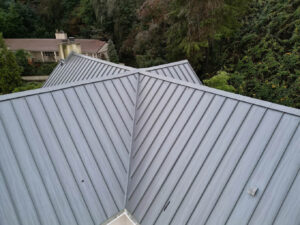
Metal roofing can also be compatible with solar, but the specific mounting method depends on the roof system and solar equipment.
Certain standing seam metal roofing systems may allow specialized mounting approaches that differ from conventional asphalt shingle installations.
That’s a solar installation and system design question that should be addressed by the solar contractor and relevant manufacturers.
From the roofing side, we’d still want to know:
- Is the metal roofing in good condition?
- Are there existing leaks?
- Are seams and penetrations performing correctly?
- Is corrosion present?
- Are previous repairs visible?
- Does the roofing system appear to have substantial useful life remaining?
Installing solar over a deteriorated metal roof creates the same basic planning problem as installing it over deteriorated shingles.
Can Solar Panels Cause Roof Leaks?
A properly designed and installed solar system shouldn’t be assumed to cause roof leaks.
However, conventional rooftop solar installations can involve roof attachments and penetrations, depending on the mounting system.
Those details need to be installed according to the solar mounting manufacturer’s requirements and applicable construction standards.
That’s another reason the roof should start in good condition.
If a leak appears after solar installation, determining its source may require coordination between the roofer and solar installer because the cause could involve:
- pre-existing roof conditions;
- flashing;
- an unrelated penetration;
- roofing deterioration;
- solar mounting details; or
- another nearby water pathway.
Don’t assume the panel itself is necessarily the source.
What Happens If You Replace the Roof After Solar Panels Are Installed?
If roofing underneath an existing solar array needs to be replaced, the solar equipment generally has to be removed from the affected roofing area so roofers can access and replace the roofing system.
The Department of Energy confirms that solar panels and mounting equipment need to be removed during roof replacement.
The basic sequence may look like:
Solar equipment removed
↓
Existing roofing removed
↓
Roof deck inspected and repaired as needed
↓
New roofing installed
↓
Solar mounting/system reinstalled by the appropriate solar professional
That can involve multiple contractors and additional coordination.
It doesn’t mean homeowners should prematurely replace a good roof.
It simply means the likely timing of future roof replacement should be considered before installing a system designed to remain there for decades.
Who Removes Solar Panels When a Roof Is Replaced?
This is an important scope question to ask before signing contracts.
A roofing contractor shouldn’t automatically be assumed to disconnect, remove, reinstall, or recommission photovoltaic equipment.
Solar equipment may involve:
- electrical connections;
- mounting hardware;
- warranties;
- manufacturer requirements;
- permitting requirements; and
- system testing.
The homeowner should establish in advance:
- who’ll remove the panels;
- who’ll store them;
- who’ll reinstall them;
- who’ll handle electrical work;
- whether permits are required;
- whether removal affects warranties; and
- how scheduling will be coordinated with the roofer.
Ferdi Roofing & Siding’s role is roofing and exterior work. Solar system design, electrical work, panel removal, and reinstallation should be handled by appropriately qualified solar and electrical professionals.
Should You Replace the Roof and Install Solar at the Same Time?
If the roof already needs replacement, coordinating the projects can make sense.
The Department of Energy specifically advises homeowners that roof replacement can be a good time to add solar because coordinating the work may avoid having to remove and reinstall panels later.
But there’s an important distinction:
“My roof needs replacement, and I’m also installing solar.”
is very different from:
“I’m installing solar, therefore I need a new roof.”
The first may be efficient project planning.
The second isn’t necessarily true.
A professional roof inspection can help separate the two.
What Should a Pre-Solar Roof Inspection Look For?
The exact scope varies by home, roof type, accessibility, and contractor.
From a roofing perspective, useful areas to evaluate can include:
Roofing materials
Are shingles, panels, or other roofing materials still performing properly?
Flashing
Are roof to wall intersections, chimneys, skylights, vents, and other vulnerable areas showing signs of failure?
Existing leaks
Has the roof leaked previously or is there evidence of active moisture intrusion?
Decking
Are there visible soft spots, sagging areas, deterioration, or other concerns?
Ventilation
Are there visible conditions suggesting the attic or roof ventilation system should be evaluated before roofing work?
Previous repairs
Have areas of the roof been patched repeatedly?
Expected remaining roof life
Does the overall condition suggest the roof is likely to remain serviceable for a significant portion of the planned solar system life?
The goal isn’t to produce a solar engineering report.
It’s to answer a roofing question:
Is there anything about the existing roof that should be repaired, replaced, or investigated before solar equipment is installed over it?
Why This Matters in Western Washington
Western Washington’s wet seasons make water management details especially important.
A minor flashing problem or recurring leak that’s manageable while the roof is completely accessible can become more inconvenient once solar equipment occupies the same roof plane.
That doesn’t make solar a poor choice.
It simply makes planning the order of operations important.
If the roof is healthy, move forward with the appropriate solar professionals.
If it needs a minor repair, address it.
If replacement is already justified based on the roof’s condition, completing that work before solar may reduce future disruption.
That’s a much better decision making framework than replacing a roof solely because somebody wants panels.
Planning Solar? Start With the Roof Underneath It
If you’re considering solar and aren’t sure about the age or condition of your existing roof, Ferdi Roofing & Siding can evaluate the roofing system before installation.
We can help identify visible roofing deterioration, leaks, flashing problems, damaged materials, decking concerns, and other conditions that may affect whether repair or replacement should be considered before your solar project moves forward.
Ferdi Roofing & Siding provides roofing services throughout Kirkland, Bellevue, Seattle, Redmond, Sammamish, Bothell, and surrounding Western Washington communities.
Frequently Asked Questions About Roofing and Solar Panels
Should I replace my roof before installing solar panels?
Only if the roof’s condition justifies replacement. A newer roof in good condition usually shouldn’t need replacement simply because solar panels are being installed. If the roof is older, deteriorating, leaking, or likely to need replacement relatively soon, evaluating or replacing it before solar installation may prevent the need to remove and reinstall the solar system later. The Department of Energy recommends considering roof age and replacement timing when planning rooftop solar.
How old is too old for a roof before installing solar?
There’s no universal age at which every roof becomes too old for solar. Roofing material, installation quality, climate exposure, repairs, flashing, leakage history, and actual condition all affect useful life. GAF recommends considering age together with damage extent and repair history when deciding whether a roof should be repaired or replaced.
How long do solar panels last?
The U.S. Department of Energy reports that most rooftop solar systems maintain at least 80% of their initial power output for at least 25 years. That long service period is one reason homeowners should consider whether the roof beneath a new system is likely to need major work during the same timeframe.
Can solar panels be installed on a 20 year-old roof?
Potentially, but age alone isn’t enough to determine suitability. A 20 year-old roof should be evaluated for roofing material condition, leaks, flashing, decking concerns, previous repairs, and expected remaining useful life before a long-lived solar system is installed over it.
If the roof is already near replacement based on its actual condition, completing roofing work first may be more practical.
Does my roof need an inspection before solar installation?
It’s a good idea to establish the roof’s condition before installing solar, particularly if its age is unknown, it’s older, or it has a history of leaks or repairs. The Department of Energy recommends having a solar installer, roofing expert, or structural engineer help determine whether a roof is suitable for solar.
Can I install solar over a roof that leaks?
An active roof leak should be diagnosed before solar installation. A small localized problem may only require repair, while widespread deterioration or multiple recurring leaks may justify a broader roofing project. Installing solar doesn’t correct an existing water intrusion problem.
Can you repair a roof before solar without replacing it?
Often, yes. If the roof is otherwise in good condition and the defect is localized, a targeted repair may be sufficient. The appropriate scope depends on the roof’s condition, material, age, surrounding damage, and source of the problem.
Do solar panels have to be removed to replace a roof?
Generally, yes, when the roofing underneath the array needs replacement. The Department of Energy states that the solar panels and mounting system need to be removed during roof replacement so the roofing work can be completed.
Will a roofing contractor reinstall my solar panels?
Don’t assume so. Roofing contractors and solar contractors have different scopes of work. A roofer may replace the roof while a qualified solar provider handles panel disconnection, removal, mounting, electrical work, reinstallation, and system commissioning.
Ask both contractors how responsibilities will be divided before beginning the project.
Can solar panels cause roof leaks?
A properly installed solar system shouldn’t automatically cause leaks, but rooftop mounting systems can involve attachments and roof penetrations depending on their design. Any penetrations and flashing must be installed correctly. A leak appearing after solar installation can also come from pre-existing roofing conditions or unrelated roof details, so the source should be diagnosed rather than assumed.
How much weight do solar panels add to a roof?
There’s no single weight that applies to every solar installation. Module type, mounting equipment, layout, and system design vary. Washington’s residential provisions include specific structural conditions involving the dead load and distribution of rooftop solar equipment, so system specific structural questions should be addressed by the solar installer, engineer, or permitting authority.
Should I replace my roof now if it might need replacement in five years?
That requires an individual assessment. Factors include the roof’s current condition, material, repair history, solar project timing, expected remaining life, cost of future solar removal and reinstallation, and how long you expect to own the home.
A roofer can help assess the roofing condition, while your solar installer can explain the implications and costs of future panel removal.
Should I inspect my roof before getting solar quotes or afterward?
If you already suspect the roof is older or has problems, getting the roof evaluated early can help you compare solar proposals with a clearer understanding of whether roofing work may also be necessary.
If the roof is newer and has no known issues, your solar provider will still need to evaluate whether the home is appropriate for its proposed system.
Can Ferdi Roofing & Siding inspect my roof before solar installation?
Ferdi Roofing & Siding can evaluate the roofing system for conditions such as deterioration, leaks, flashing problems, damaged roofing materials, previous repairs, and other roofing concerns before solar equipment is installed.
Ferdi’s roofing inspection doesn’t replace the solar installer’s system design, structural engineering, electrical review, permitting, or solar specific requirements. Those responsibilities should remain with the appropriately qualified solar professionals.
Editorial Sources
This article uses homeowner and technical guidance from the U.S. Department of Energy, Washington State residential code provisions, and roofing industry resources from GAF.