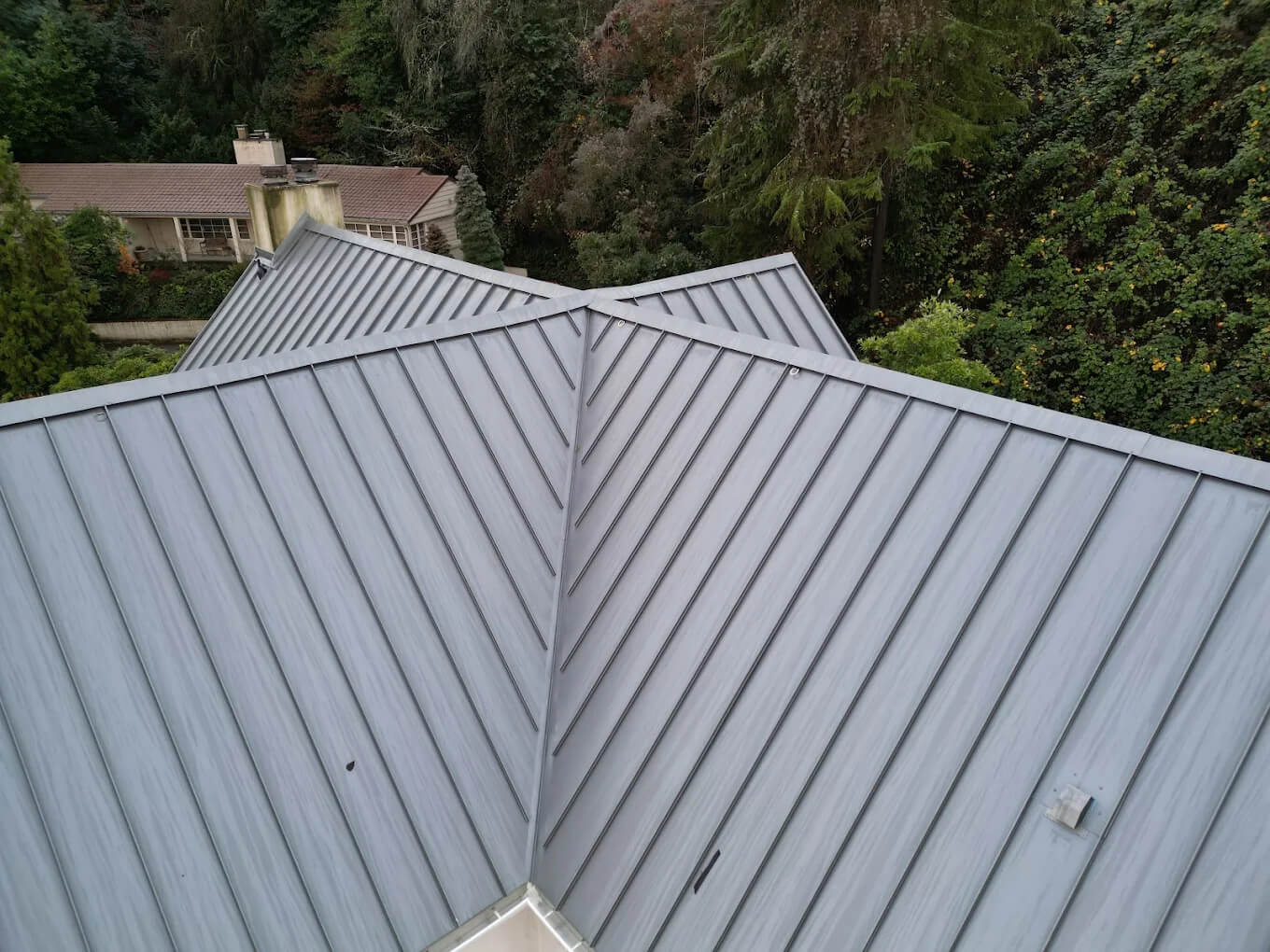
How Much Does a Standing Seam Metal Roof Cost in Washington State?
Standing seam metal roofing is becoming a popular option for Washington homeowners who want a durable roof, a clean architectural appearance, and dependable performance in a climate known for frequent rainfall.
Its raised seams, concealed fastening systems, and long service life make it particularly appealing for homeowners planning a major roof replacement.
But standing seam roofing also represents a larger initial investment than traditional asphalt shingles, and the price can vary significantly from one house to another.
In 2026, published Seattle area pricing estimates place standing seam metal roofing at approximately $7 to $30 per square foot installed. Actual projects can fall outside that broad range depending on the metal selected, roof size, panel system, installation complexity, and condition of the existing roof.
For homeowners in Kirkland, Bellevue, Redmond, Seattle, and surrounding communities, a reliable estimate needs to account for more than the visible metal panels. Flashing, roof preparation, underlayment, ventilation, and water management all contribute to the finished roofing system.
This guide explains what standing seam metal roofing costs, why prices vary, and what to look for when comparing contractor estimates.
How Much Does a Standing Seam Metal Roof Cost in 2026?
According to Angi’s 2026 Seattle metal roofing cost guide, installed standing seam metal roofing prices can range from approximately $7 to $30 per square foot.
That is a broad estimate covering different products and installation conditions, not a fixed local contractor price.
National pricing research from Angi also places many complete standing seam projects between approximately $9,400 and $32,600, with larger or more complicated projects potentially costing considerably more.
The difference between these figures reflects variations in the size and scope of projects included in the data.
Estimated standing seam metal roof costs by roof size
The following examples are adapted from Angi’s published 2026 national standing seam roofing estimates.
| Total roof area | Estimated installed cost |
|---|---|
| 1,000 square feet | $10,000 to $18,000 |
| 1,500 square feet | $15,000 to $24,000 |
| 2,000 square feet | $18,000 to $32,000 |
| 2,500 square feet | $25,000 to $40,000 |
| 3,000 square feet | $30,000 to $48,000 |
Source: Angi, Standing Seam Metal Roof Installation Cost, updated May 30, 2026. These are national planning estimates, not Ferdi Roofing & Siding prices or verified quotes for Washington properties. Costs may be higher or lower depending on the project.
These figures are useful for establishing a preliminary budget, but they do not replace an inspection and a written estimate.
A relatively simple roof with broad, uninterrupted surfaces may be less expensive to install than a smaller roof containing steep pitches, multiple valleys, dormers, chimneys, and skylights.
For homes in Western Washington, the condition of the existing roof deck and the complexity of waterproofing details can be especially important.
Planning a metal roof replacement? Request an estimate from Ferdi Roofing & Siding.
What Is Standing Seam Metal Roofing?
Standing seam metal roofing uses long metal panels joined together along raised seams that run in the direction of the roof slope.
Most standing seam systems use concealed fastening arrangements rather than exposed screws passing directly through the main surface of each panel.
This creates the clean, uninterrupted appearance that distinguishes standing seam roofing from many conventional metal panel products.
The design also allows water to drain efficiently down the roof while reducing the number of exposed panel fasteners that require weather seals.
However, not every standing seam roofing system is identical.
Panel profiles, seam heights, metal thicknesses, fastening methods, coatings, and installation requirements can differ substantially.
Standing seam versus exposed fastener metal roofing
Exposed fastener roofing uses screws that penetrate the visible metal panels. Those screws generally incorporate sealing washers and require ongoing attention as the roofing system ages.
Standing seam systems typically conceal the primary panel fasteners beneath raised seams or panel connections.
This can reduce exposure of those fasteners to weather and may provide advantages for long term maintenance.
The difference is especially relevant for homeowners looking for a premium residential roofing system.
Snap lock versus mechanically seamed panels
Some standing seam systems use panels designed to snap together along their raised edges.
Others require a specialized tool to mechanically fold or close the seams.
The correct system depends on roof pitch, wind requirements, manufacturer specifications, panel dimensions, and other design factors.
A mechanically seamed system may be required for certain roof configurations, while a properly specified snap lock system can work well in many other applications.
The appropriate panel profile should be selected for the actual roof rather than appearance alone.
Seven Factors That Affect Standing Seam Metal Roof Cost
The final price of a metal roof depends on how the complete roofing system will be installed.
These seven factors deserve particular attention when reviewing estimates.
1. Total roof area
The larger the roof, the more metal panels, underlayment, flashing, accessories, and labor the project generally requires.
However, the home’s interior square footage is not the same as the roof surface area.
A 2,000 square foot house may have considerably more or less than 2,000 square feet of roofing depending on its layout, pitch, overhangs, garages, and additional roof sections.
Contractors typically evaluate the actual roof geometry rather than relying only on the home’s advertised size.
Roof measurements should also account for the additional material needed at panel edges, valleys, hips, and other transitions.
2. Roof pitch and architectural complexity
A simple roof with two broad slopes is generally more straightforward to install than one with numerous intersecting roof planes.
Complex roof designs require additional cutting, fabrication, and careful detailing around transitions.
Features that can increase installation costs include dormers, valleys, hips, steep sections, skylights, chimneys, roof vents, and multiple levels.
Steep roofing can also require additional fall protection, access equipment, and installation time.
These factors explain why two homes of similar size may receive very different standing seam estimates.
3. Metal selection
Standing seam roofing can be manufactured using several different metals.
Coated steel
Steel roofing is widely used for residential standing seam systems. Protective metallic coatings and factory applied finishes help resist corrosion and weather exposure.
The type of coating, thickness, finish quality, and manufacturer warranty all matter.
Aluminum
Aluminum is naturally resistant to red rust and may be suitable for certain environments, including projects where corrosion resistance is a major consideration.
Its physical properties and installation requirements differ from steel.
Copper
Copper provides a distinctive architectural appearance and develops a natural patina over time.
It is generally a premium material with substantially higher initial costs.
Zinc
Zinc is another specialized architectural roofing material known for its appearance and protective surface patina.
It requires appropriate detailing and compatibility with the surrounding roofing components.
For many residential projects, coated steel and aluminum are the principal options worth evaluating first. Copper and zinc tend to serve more specialized architectural preferences.
4. Panel thickness and roofing profile
Metal panel thickness is commonly expressed using gauge for steel products, although gauge conventions differ by metal.
A lower steel gauge number generally indicates thicker material.
For example, 24 gauge steel is thicker than 26 gauge steel.
The appropriate thickness depends on the roofing system, panel profile, substrate, design loads, and manufacturer’s requirements.
Thicker material can increase costs, but choosing the thickest available panel is not automatically necessary or appropriate for every home.
Panel width and profile also influence both appearance and installation.
The contractor should specify the actual system rather than simply describing it as a metal roof.
5. Removal of the existing roof
Removing existing asphalt shingles or other roofing materials adds labor, disposal costs, and site preparation.
Although certain metal systems can be installed over existing roofs when permitted by the manufacturer and applicable requirements, that approach is not suitable for every project.
Removing old roofing often allows the contractor to inspect the roof deck and identify damaged materials that might otherwise remain concealed.
For Washington homes with recurring leaks or signs of deterioration, that inspection can be especially valuable.
6. Roof decking and moisture damage
Water intrusion can damage the wood sheathing beneath an existing roof.
Deteriorated decking may need to be repaired or replaced before the new roofing system is installed.
The extent of that work may not be fully visible until old roofing materials are removed.
Other components, including fascia, roof penetrations, and certain flashing details, may also require correction.
An estimate should explain how concealed damage will be documented and how additional work will be authorized if necessary.
7. Underlayment, flashing, ventilation, and roof penetrations
The finished metal panels are only one component of a functioning roofing system.
Underlayment, flashing, compatible accessories, ventilation, and drainage details all affect long term performance.
Certain standing seam systems require specific underlayment products, roof deck conditions, panel attachment methods, and installation details.
The contractor should follow the selected roofing manufacturer’s requirements and applicable codes.
Cutting corners on these components to reduce the initial price can undermine the performance of an otherwise durable roof.
Why Standing Seam Installation Details Matter in Washington
Western Washington’s climate creates particular demands on roofing systems.
Persistent rainfall, wind driven moisture, shaded roof surfaces, and seasonal temperature changes make proper water management essential.
Metal roofing can provide excellent protection in these conditions, but the material itself does not make the entire roof waterproof.
Water intrusion is more likely to occur where roofing components meet than through the uninterrupted center of a correctly installed metal panel.
Valleys and intersecting roof sections
Roof valleys concentrate runoff from two or more roof slopes.
Standing seam valley details must accommodate water movement, panel termination, and the selected system’s requirements.
Poorly detailed valleys can create opportunities for water intrusion, particularly during prolonged or wind driven rainfall.
Chimneys and roof to wall connections
Chimneys and adjoining walls interrupt the roofing surface and require carefully integrated flashing.
The flashing must direct water back onto the roof surface without relying solely on exposed sealant.
Proper transitions are especially important when replacing an older roofing system that previously experienced leaks.
Skylights and ventilation penetrations
Skylights, plumbing vents, and other penetrations require components suitable for the specific metal roof profile.
A contractor should determine how those connections will be flashed and maintained over time.
Existing skylights may also need inspection before being incorporated into the new roofing system.
Thermal expansion and contraction
Metal expands and contracts as temperatures change.
Standing seam roofing systems must account for that movement through their panel and attachment design.
The Metal Construction Association’s guidance on standing seam roof clips explains the importance of selecting attachment systems that accommodate thermal movement while maintaining the required structural performance.
That is one reason panel systems and fastening details should be chosen based on engineering and manufacturer specifications, not price alone.
Attic ventilation and moisture control
Roof performance also depends on controlling moisture from inside the home.
Warm, moist indoor air that reaches cold roof components can contribute to condensation under certain conditions.
Depending on the building assembly, appropriate insulation, air sealing, vapor control, and ventilation may be necessary.
Installing a premium metal roof does not eliminate the need to evaluate these underlying conditions.
Ferdi Roofing & Siding’s roof installation and replacement services consider the complete roofing system, including flashing, ventilation, waterproofing, and roof deck condition.
Is a Standing Seam Metal Roof Worth the Higher Cost?
For some homeowners, the additional investment makes sense. For others, architectural asphalt shingles may provide better overall value.
The decision should reflect how long you expect to own the home, your budget, the condition of the roof, your preferred appearance, and the importance you place on future maintenance.
Longer potential service life
Metal roofing systems can provide decades of service when properly designed, installed, and maintained.
Ferdi’s existing roofing guidance identifies approximately 40 to 70 years as a possible service life for quality metal roofing systems.
That is a planning range, not a warranty or a prediction for a particular roof.
Actual performance depends on material selection, coatings, weather exposure, roof design, installation quality, and maintenance.
A long expected service life may be especially attractive to homeowners who plan to remain in the property for many years.
Less reliance on exposed fasteners
Concealed fastener standing seam systems can reduce some maintenance concerns associated with exposed fastener roofing.
However, roof penetrations, sealants, protective finishes, gutters, and flashing still require periodic evaluation.
Metal roofing is relatively low maintenance, not maintenance free.
A distinctive architectural appearance
Standing seam panels create strong vertical lines that complement contemporary homes, Northwest architecture, and certain traditional designs.
A range of panel profiles and finishes allows homeowners to select an appearance that works with existing siding, trim, windows, and landscaping.
For many projects, appearance is an important part of the investment decision.
Potentially fewer roof replacements
A longer lasting roof may reduce the likelihood of needing another complete replacement during the homeowner’s ownership period.
However, that does not guarantee a specific financial return.
Future maintenance expenses, repair costs, energy use, home value, and ownership duration will vary.
The better question is whether the additional initial cost is justified by the performance characteristics that matter to you.
For a direct material comparison, read Metal Roof vs. Asphalt Shingles in Washington’s Climate.
Does Metal Roofing Reduce Energy Costs?
It can, but energy savings should not be assumed for every metal roof.
Some metal roofing products have reflective coatings designed to reduce solar heat absorption.
According to the U.S. Department of Energy’s guidance on cool roofs, roof surface reflectance and thermal emittance influence how much solar heat a roof absorbs and releases.
A reflective metal roof may help reduce cooling loads during warmer weather.
However, the actual benefit depends on the specific coating, roof color, insulation, attic conditions, ventilation, building design, and local climate.
Western Washington has substantial heating demand as well as periods of summer warmth, so potential cooling benefits should be considered in the context of the whole home.
Not every metal roofing product qualifies as a cool roof, and a dark metal panel is not necessarily highly reflective simply because it is made of metal.
Homeowners interested in energy performance should ask for the actual product’s tested reflectance and emittance information.
Standing Seam Metal Roofing vs. Asphalt Shingles: Cost and Value
Architectural asphalt shingles generally cost less to install initially.
Standing seam metal roofing typically requires more investment in materials, fabrication, specialized labor, and roofing details.
Both can perform well in Western Washington when installed correctly.
| Factor | Standing Seam Metal | Architectural Asphalt Shingles |
|---|---|---|
| Initial installation cost | Generally higher | Generally lower |
| Expected service life | Often longer | Typically shorter |
| Appearance | Raised seams and architectural metal panels | Traditional residential shingle appearance |
| Primary fastening | Usually concealed panel attachments | Nails concealed by overlapping shingles |
| Repair considerations | May require specialized panel work | Individual shingles may be replaceable |
| Routine maintenance | Inspections and attention to details and finishes | Inspections, possible moss management, and shingle repairs |
| Rain performance | Effective water shedding when properly detailed | Reliable when properly installed |
| Best fit | Homeowners prioritizing longevity and architectural appearance | Homeowners balancing cost, performance, and repairability |
The right material depends on the actual roof and the homeowner’s priorities.
A straightforward asphalt roof may be the most sensible solution for someone planning to sell in the near future.
A homeowner intending to stay for decades may place greater value on the potential service life of standing seam metal.
Neither option should be selected solely on the basis of a generalized lifespan claim.
How to Compare Metal Roofing Estimates
When comparing contractors, it is important to understand what each proposal includes.
Two estimates with very different prices may not describe the same roofing system.
A detailed standing seam roofing proposal should identify:
Metal type and roofing system. The manufacturer, panel profile, material, thickness, and finish.
Roof preparation. Whether existing roofing will be removed and how exposed decking will be evaluated.
Underlayment. The products and installation details appropriate for the selected system.
Panel attachment. How the system accommodates thermal movement and meets required design loads.
Flashing. What work is included at valleys, chimneys, skylights, walls, and roof penetrations.
Ventilation. Whether existing ventilation or moisture control conditions require changes.
Drainage. How gutters and downspouts will be handled.
Additional repairs. How concealed damage will be documented, priced, and approved.
Warranty information. The applicable material, finish, and workmanship warranties, including exclusions.
Project details. Scheduling, permits where required, property protection, cleanup, and payment terms.
A proposal that identifies the actual roofing system and installation details provides more useful information than a single total price.
Why the lowest metal roofing bid may not be the best choice
A lower price can reflect an efficient installation or a different product selection.
It can also result from omitted work, different material specifications, or assumptions about the existing roof.
Rather than choosing solely on price, compare the complete scope of work.
Ask each contractor to explain the roofing system they recommend and why it is appropriate for your home.
Is Standing Seam Metal Roofing Right for Your Home?
Standing seam metal roofing may be particularly appealing if you’re planning to remain in your home for many years, want a contemporary architectural finish, or prefer a roofing system with concealed panel fasteners.
It’s also worth considering when other exterior improvements are underway, especially if roof flashing and drainage must be coordinated with siding, skylights, gutters, or other building components.
However, not every home needs a premium metal roof.
Roof pitch, structural conditions, architectural style, project budget, and homeowner preferences may make another roofing material more appropriate.
The first step is understanding the existing roofing system and what the new installation needs to accomplish.
Metal Roofing Estimates in Kirkland, Bellevue, Seattle, and the Eastside
Ferdi Roofing & Siding provides metal roofing installation and roof replacement services throughout Kirkland, Bellevue, Seattle, Redmond, Bothell, Woodinville, Kenmore, Issaquah, Sammamish, Newcastle, Renton, and nearby communities.
Since 2017, Ferdi has provided roofing and exterior remodeling services for Western Washington homeowners.
Our work includes standing seam metal roofing, roof inspections, roof replacement, flashing, gutters, skylights, and related exterior improvements.
For homeowners considering a metal roof, the estimating process should begin with the condition and design of the existing roof, followed by a discussion of suitable materials and the work needed for a complete installation.
Request a Standing Seam Metal Roofing Estimate
Frequently Asked Questions About Standing Seam Metal Roof Costs
How much does a standing seam metal roof cost per square foot in Washington?
Published 2026 Seattle pricing guidance from Angi lists installed standing seam metal roofing at approximately $7 to $30 per square foot. This is a broad research estimate, not a contractor quote. The final cost depends on roof area, metal type, panel system, pitch, flashing, access, and existing roof conditions.
How much does a standing seam metal roof cost for a 2,000 square foot roof?
Angi’s 2026 national standing seam pricing guide gives an estimated range of approximately $18,000 to $32,000 for a 2,000 square foot roof. Actual costs in Washington may fall outside that range depending on design, materials, installation requirements, and concealed repairs. Roof area should not be confused with interior home square footage.
Is standing seam metal roofing more expensive than asphalt shingles?
Yes. Standing seam metal roofing generally requires a higher initial investment than architectural asphalt shingles because of the panel materials, specialized installation, and detailing requirements. The potential benefit is a longer service life, depending on the system, installation, and maintenance.
Why is standing seam metal roofing expensive?
The cost reflects the metal panels, protective finishes, fabrication, fastening system, specialized labor, underlayment, flashing, and roof preparation. Complex rooflines and concealed damage can increase the installation scope.
How long does a standing seam metal roof last in Washington?
Quality metal roofing systems can provide decades of service, and some may last approximately 40 to 70 years under suitable conditions. Actual service life depends on the metal, coating, installation, weather exposure, maintenance, and roof assembly. Manufacturer warranties should not be confused with guaranteed roof lifespan.
Is standing seam metal roofing good for heavy rain?
Standing seam systems can perform very well in rainy environments when correctly designed and installed. Raised seams and concealed panel fasteners provide useful water management characteristics. Proper underlayment, flashing, penetrations, and drainage remain essential.
Does standing seam metal roofing require maintenance?
Yes. Metal roofs should be inspected periodically for debris accumulation, coating damage, flashing problems, roof penetrations, and other conditions. Maintenance requirements vary by material and manufacturer. Metal roofing is generally considered relatively low maintenance, but it is not maintenance free.
Can standing seam metal roofing be installed over existing shingles?
Some roofing systems may permit installation over an existing roof when the roof structure, substrate, manufacturer requirements, and applicable codes allow it. However, removing old roofing can provide an opportunity to inspect decking and correct concealed damage. The appropriate approach should be determined for the specific property.
Will a metal roof be noisy when it rains?
Rain noise depends on the complete roof assembly, including the roof deck, insulation, attic, and interior finishes. Metal roofing installed over a solid roof deck in a typical insulated home may be considerably quieter than exposed metal roofing on an open structure. Sound performance varies by construction.
Does a standing seam metal roof increase home value?
A quality metal roof may improve curb appeal and appeal to buyers who value durability and reduced future replacement concerns. However, the financial return depends on the housing market, roof condition, material selection, installation quality, and buyer preferences. No specific resale value increase can be guaranteed.
Get a Metal Roof Estimate Based on Your Actual Home
Online pricing guides are useful for establishing expectations, but every roofing project has its own conditions.
Your roof’s size, pitch, layout, existing materials, water management details, and selected standing seam system will determine the work required and the actual investment.
Ferdi Roofing & Siding helps Washington homeowners evaluate metal roofing options and understand the installation scope before moving forward.
Request Your Metal Roofing Estimate or call 425-495-7795 to discuss your project.