Why Is My Skylight Leaking? Common Causes and What to Do
A skylight can leak because of damaged or incorrectly installed flashing, problems with the roofing around it, failed seals, an aging skylight, debris interfering with drainage, or water entering somewhere higher on the roof. In some cases, what looks like a skylight leak is actually condensation rather than rainwater entering from outside.
The first step is determining where the moisture is really coming from.
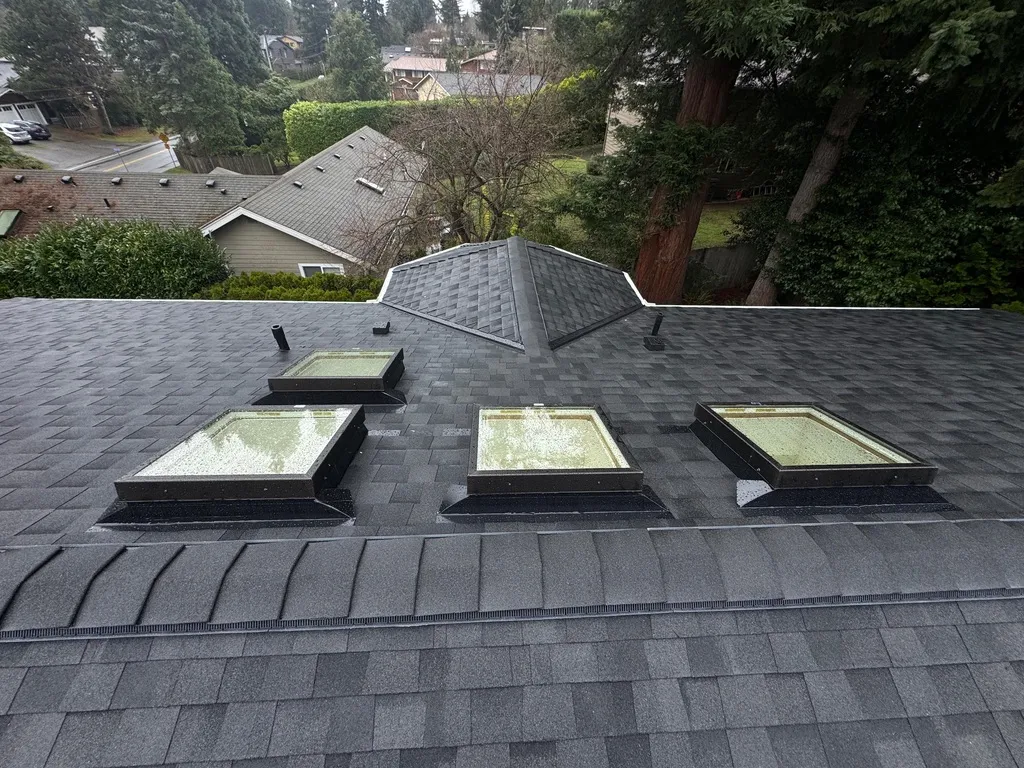
A modern skylight installation depends on several layers working together. VELUX describes its deck mounted skylight system as using a deck seal, underlayment, and engineered flashing to provide multiple layers of water protection.
If any part of the surrounding roofing or waterproofing system fails, water can appear around the skylight even when the glass itself is not the problem.
7 Common Reasons Skylights Leak
1. Failed or Damaged Skylight Flashing
Flashing is one of the first areas to investigate.
It directs roof water around the skylight and back onto the roofing surface.
Problems can develop if flashing is:
- Damaged
- Missing
- Improperly installed
- Corroded
- Separated
- Reused incorrectly during roof replacement
Because skylights interrupt the roofing surface, the flashing needs to integrate correctly with the surrounding roofing and underlayment.
VELUX identifies engineered flashing as a primary water management component of its skylight installations.
2. Roofing Around the Skylight Is Failing
Sometimes the skylight is blamed for a leak that actually starts in the surrounding roof.
Possible problems include:
- Cracked shingles
- Missing shingles
- Failed underlayment
- Damaged roof decking
- Improper previous repairs
- Water entering higher up the roof
Water can travel beneath roofing materials before becoming visible around the skylight opening.
That is why Ferdi evaluates skylight leaks in connection with the surrounding roofing rather than treating the skylight as an isolated component. Ferdi’s existing roofing guidance also notes that skylight moisture may come from flashing, condensation, roofing defects above the unit, or improper installation.
3. The Skylight or Seal Has Aged
Skylights do not last forever.
Over time, components can deteriorate and seals can fail.
VELUX lists dripping around the sides of a skylight or water accumulating beneath it as signs that replacement may need to be considered.
Whether an older unit can be repaired depends on:
- Skylight age
- Manufacturer
- Available parts
- Condition of the frame
- Glass condition
- Flashing
- Roof condition
Sometimes replacing an aging skylight makes more sense than repeatedly repairing components around it.
4. Condensation Is Being Mistaken for a Leak
This is one of the most important distinctions.
If warm, humid indoor air reaches a cold skylight surface, condensation can form and drip into the room.
That means seeing water around the skylight does not automatically mean rain is getting through the roof.
Possible signs of condensation include:
- Moisture during cold weather without rain
- Water consistently forming on interior glass
- Moisture concentrated along the interior frame
- High indoor humidity
VELUX has documented situations where interior warm, moist air can create condensation within skylight components and cause dripping that resembles a leak.
What If Moisture Is Between the Glass Panes?
Condensation between insulated glass panes is a different problem.
VELUX notes that persistent condensation or streaks between panes can indicate seal failure and may be a sign that replacement should be considered.
5. The Original Skylight Was Installed Incorrectly
Poor installation can create leaks years before the skylight itself should fail.
Possible issues include:
- Incorrect flashing
- Missing underlayment
- Improper roof integration
- Incorrect fasteners
- Inadequate waterproofing
- Wrong flashing kit for the roofing material or roof pitch
Modern skylight systems often use manufacturer specific flashing and waterproofing details precisely because the installation must integrate with the roofing system.
6. Debris Is Interfering With Drainage
Leaves, needles, moss, and other debris can collect around skylights, especially on wooded Eastside properties.
Accumulated debris may slow drainage and keep areas of the roof wetter for longer.
Regular roof maintenance can help keep water moving in the direction the system was designed to handle.
Avoid climbing onto a roof unless you can do so safely. Steep, wet, moss-covered, or damaged roofs should be inspected by a professional.
7. Water Is Entering Somewhere Else
The skylight may simply be where the water becomes visible.
A leak could originate from:
- Higher on the roof
- A roof penetration
- A valley
- Damaged shingles
- Flashing farther uphill
- A roof-to-wall connection
Water can move along the roof deck or framing before reaching the skylight opening.
That is why repeated skylight caulking sometimes fails to solve the problem.
How Do I Know If My Skylight Is Leaking or Condensating?
Start by paying attention to when the moisture appears.
More likely to be a rainwater leak:
- Moisture appears during or soon after rain
- Staining develops around drywall surrounding the skylight
- Water enters from one side
- Roofing or flashing is visibly damaged
- The problem is worse during wind driven rain
More likely to involve condensation:
- Moisture appears during cold weather even when it has not rained
- Water consistently forms on the interior glass
- Indoor humidity is high
- Moisture appears uniformly across the interior surface
These are clues, not a definitive diagnosis. A roof or skylight inspection may still be necessary.
Why Does My Skylight Only Leak During Heavy Rain?
A leak that appears only during heavier rain can point toward a water management problem that becomes overwhelmed under higher volumes of runoff.
Possible causes include:
- Flashing defects
- Roofing defects
- Debris
- Wind driven rain
- Problems above the skylight
- A previous repair that only partially addressed the source
Do not assume that “it only leaks during really bad weather” means the problem can safely be ignored.
Water should not be entering the finished interior.
Why Does My Skylight Leak When It Is Windy?
Wind can push rain into areas that aren’t exposed during ordinary vertical rainfall.
This can make flashing, seal, roofing, and installation defects more noticeable.
The exact cause still needs to be confirmed before choosing a repair.
Can You Repair a Leaking Skylight?
Often, yes. Repair may make sense when:
- The skylight itself remains in good condition
- Flashing can be repaired or replaced
- The leak comes from surrounding roofing
- The unit is relatively young
- Parts remain available
- There is no significant frame or glass failure
VELUX notes that some leaking skylight situations involve repairing or replacing flashing and sealing rather than replacing the entire unit.
When Should a Skylight Be Replaced?
Replacement may make more sense when:
- The skylight is old
- Glass seals have failed
- Cracks are present
- The frame has deteriorated
- Leaks keep returning
- Compatible repair parts are difficult to obtain
- The roof is being replaced anyway
VELUX identifies recurring dripping, water beneath the unit, cracks, condensation between panes, and other age related conditions as reasons to evaluate replacement
Should You Replace Skylights When Replacing the Roof?
It can be a very good time to evaluate them. During roof replacement, the roofing and flashing around the skylight are already being disturbed. If the skylight is relatively new and functioning correctly, replacement may not be necessary.
If it is older or showing signs of deterioration, replacing it at the same time can avoid disturbing a relatively new roof later.
VELUX specifically markets replacement options designed to integrate new skylights with existing roof openings and flashing systems.
Can You Just Caulk Around a Leaking Skylight?
Sometimes sealant is part of a legitimate repair, but simply applying caulk around the perimeter is not a universal skylight leak solution.
If the real problem is failed flashing, roofing damage, improper underlayment, or water entering somewhere else, surface caulk may only mask the symptom temporarily.
Repeated caulking without identifying the cause is a sign that a more complete inspection may be worthwhile.
Can a Skylight Leak Damage the Roof?
Yes. If water continues entering around a skylight, nearby materials can eventually be affected.
Possible damage can involve:
- Roof decking
- Interior drywall
- Insulation
- Trim
- Paint and finishes
How extensive the repair becomes depends on how much water has entered and how long the condition has existed.
Is a Leaking Skylight an Emergency?
A few drops do not necessarily mean structural failure, but active water entry should not be ignored.
If water is entering during a storm:
- Move belongings away from the area
- Protect interior finishes when safe
- Document the leak
- Avoid climbing onto a wet roof
- Arrange an inspection
Large leaks, sagging ceiling materials, or electrical fixtures affected by water deserve greater urgency.
What Does a Skylight Inspection Include?
Ferdi may evaluate:
- The skylight itself
- Flashing
- Surrounding shingles or roofing
- Underlayment
- Roof pitch
- Nearby penetrations
- Roof decking
- Interior staining
- Condensation symptoms
- Previous repairs
Ferdi provides skylight installation and repair in Kirkland, Bellevue, Redmond, and surrounding Eastside communities, with a focus on integrating the unit with the roofing and waterproofing system.
Get the Leak Diagnosed Before Repairing the Wrong Thing
Water around a skylight does not always mean you need a new skylight.
Sometimes the problem is flashing. Sometimes it is roofing. Sometimes the skylight has actually failed. And sometimes there’s no exterior leak at all.
Ferdi Roofing & Siding can inspect the skylight and surrounding roof to determine where the moisture is coming from and whether repair or replacement makes the most sense.
Request a Skylight Inspection or Repair Estimate
Or call (425) 495-7795.
Leaking Skylight FAQs
Why is water coming in around my skylight?
Common causes include flashing problems, roofing defects, an aging skylight, failed seals, improper installation, or condensation. The location of visible water does not always reveal the entry point.
Why does my skylight leak only when it rains?
That pattern suggests exterior water intrusion is more likely than ordinary indoor condensation. Flashing, surrounding roofing, underlayment, and drainage should be evaluated.
Why does my skylight leak during heavy rain but not light rain?
Heavy rain can expose drainage or flashing problems that do not appear under lower water volumes. Wind driven rain can also enter vulnerable areas differently.
How do I know if my skylight flashing is leaking?
Water staining around the skylight, leaks during rain, or deterioration in surrounding roofing can indicate a flashing problem. A professional inspection is usually the best way to confirm the cause.
Can skylight flashing be replaced without replacing the skylight?
Sometimes. If the skylight is still in good condition and compatible flashing is available, the flashing system may be repairable or replaceable.
Does condensation mean my skylight is leaking?
No. Interior condensation can form when warm, humid air contacts cold surfaces. VELUX documents condensation conditions that can result in dripping even without exterior rain penetration.
What does condensation between skylight panes mean?
Persistent moisture or streaking between insulated glass panes can indicate a failed glass seal. VELUX identifies this as a possible reason to replace the skylight.
Can I fix a leaking skylight with caulk?
Caulk may be appropriate for certain details, but it will not correct every leak. Failed flashing or roofing needs to be properly repaired rather than simply covered with sealant.
Can a skylight leak because of the roof?
Yes. Damaged roofing or a leak above the skylight can allow water to travel before appearing around the skylight opening.
How long do skylights last?
There’s no single lifespan for every skylight. Product type, installation, weather exposure, maintenance, seals, flashing, and roof conditions all influence when replacement becomes necessary.
Can a leaking skylight cause mold or rot?
Continued moisture can contribute to deterioration of wood and interior materials. The extent depends on how much water is entering and how long the area remains wet.
Does Ferdi repair skylights?
Yes. Ferdi provides skylight installation and repair in Kirkland, Bellevue, Redmond, and surrounding Eastside communities.